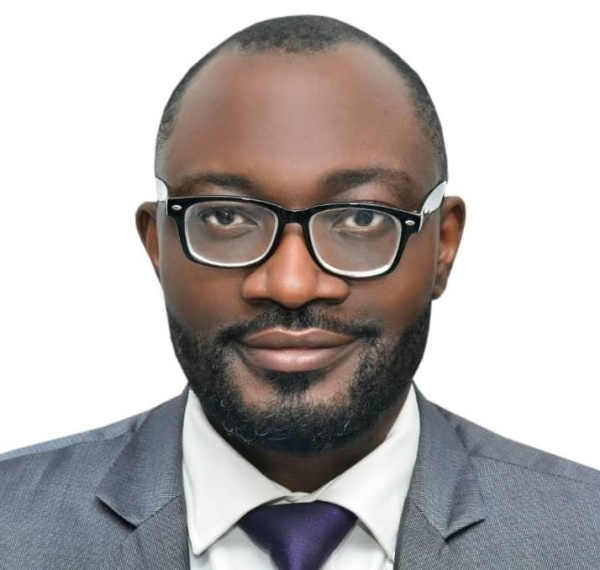
In the annals of African medical scholarship and global health leadership, few figures command the respect, influence, and transformative impact of Professor Mayowa Ojo Owolabi. A Professor of Neurology at the University of Ibadan, Director of the Center for Genomic and Precision Medicine, Honorary Consultant Neurologist at University College Hospital (UCH) Ibadan, and former Dean of the Faculty of Clinical Sciences (2018–2022), he stands as a living embodiment of what disciplined excellence, visionary leadership, and an unwavering commitment to African solutions can achieve on the world stage.
His journey is more than a personal success story. It is a powerful narrative of African-led scientific discovery, capacity building across the continent, and pragmatic innovations that are reshaping how the world understands, prevents, and treats stroke and neurological disorders — especially in populations of African ancestry. As we celebrate excellence in African academia, research, and healthcare innovation, Professor Owolabi’s life and work offer both inspiration and a blueprint for the next generation.
The Formative Years: Building an Unshakeable Foundation
Born and raised in Nigeria, Professor Owolabi’s academic odyssey began at the University of Ibadan, where he earned his MBBS in 1997. Even in those early years, his brilliance was evident — he clinched multiple prizes, including the Best Student in Medicine (Part IV MBBS) and the Ekpo Eyo Prize in Medicine and Radiology.
His thirst for deeper knowledge took him to Germany on a prestigious DAAD scholarship, where he obtained a Certificate in Neurology and later the Doctor medicinae (Dr. med.) magna cum laude from Charité University of Medicine, Humboldt University, and Free University of Berlin. He further strengthened his expertise with a Certificate in Epidemiology & Global Health from the University of Dundee (Scotland) and an MSc in Biomedical Education with distinction from the University of Ibadan.
In 2023, in a rare and historic moment coinciding with the University of Ibadan’s 75th anniversary and his 50th birthday, he was awarded the Doctor of Science (DSc) degree — becoming only the fifth individual in the university’s history to receive this highest academic honour. This was not merely recognition of past achievements; it was a crowning affirmation of a career defined by groundbreaking contributions to knowledge.
Ascending to the Pinnacle: Leadership Rooted in Service
Professor Owolabi’s rise through the ranks at the University of Ibadan has been meteoric yet grounded in service. From Lecturer to Senior Lecturer, Professor, and eventually Dean of the Faculty of Clinical Sciences, he left an indelible mark. As Dean, he championed curriculum reforms, strengthened postgraduate training, and elevated the faculty’s research profile.
Today, as Director of the Center for Genomic and Precision Medicine (which he pioneered), he leads efforts to translate genomic insights into practical healthcare solutions for Africans. His leadership extends far beyond Ibadan: he serves on the Board of Directors of the World Stroke Organization, as African Regional Director of the World Hypertension League, as pioneer Regional Vice-President (Sub-Saharan Africa) and member of the Presidium of the World Federation for Neurorehabilitation, and in key WHO technical advisory roles on non-communicable diseases and neurological disorders.
Revolutionizing Stroke Research: Putting Africa at the Center of Global Discovery
Stroke is one of the most devastating non-communicable diseases in Africa, striking younger populations and carrying higher mortality and disability rates than in many other regions. For too long, the dominant risk models and genetic insights were derived from European and North American populations — leaving critical gaps in understanding African-specific factors.
Professor Owolabi has been at the forefront of closing that gap. As Overall Principal Investigator of the landmark Stroke Investigative Research and Educational Network (SIREN) — the largest study of stroke on the African continent — he led a multi-country consortium spanning over 12 African nations and involving more than 55,000 participants. SIREN established one of Africa’s largest neurobiobanks (>170,000 samples) and delivered transformative findings, including the identification of both genetic and non-genetic risk factors unique to African populations.
Among his team’s most celebrated discoveries:
- The protective, dose-response effect of green leafy vegetables against stroke and hypertension — a culturally relevant, actionable public health message.
- The association between APOL1 variants and stroke in Africans.
- Novel genome-wide significant associations near genes such as AADACL2 and microRNA MIR5186 through the first-ever stroke GWAS in indigenous Africans (SIBS-Genomics).
These discoveries are not academic footnotes. They are foundational for precision medicine tailored to African genomes and for developing targeted prevention and treatment strategies that actually work for African populations.
His other major initiatives — including ARISES (African Rigorous Innovative Stroke Epidemiological Surveillance), GRASP (Growing Data-science Research in Africa to Stimulate Progress), and multiple NIH-funded projects — continue to build sustainable research capacity while generating data that informs policy across the continent.
Innovative Frameworks That Save Lives and Restore Dignity
Beyond data and genetics, Professor Owolabi is a prolific innovator of conceptual models and practical tools. He introduced the ‘Seed of Life Model’ — a holistic framework for understanding quality of life and human flourishing. He developed the HRQOLISP, a globally validated, multicultural quality-of-life instrument for stroke survivors now used in multiple languages and countries.
Perhaps most influential is his articulation of the Stroke Quadrangle (surveillance, prevention, acute care, and rehabilitation) and the Brain Quadrangle — frameworks now adopted globally as cardinal approaches to reducing the burden of stroke and promoting brain health. He also created the Stroke Levity Scale, a simple, valid, and time-saving measure of stroke severity, and contributed to mobile applications for stroke and hypertension prediction and prevention in Africa.
These are not theoretical constructs. They are pragmatic tools designed for resource-limited settings, directly addressing the realities faced by African patients, families, and health systems.
A Prolific Scholar with Global Reach
With over 460 peer-reviewed publications in journals including The Lancet, Nature, and The Lancet Neurology, an h-index exceeding 100, and more than 170,000 citations, Professor Owolabi ranks consistently among the global top 2% of scientists. He serves as Associate Editor of the prestigious journal Stroke and holds editorial roles in several other high-impact neurology and medical journals.
In 2021, he received the World Stroke Organization Global Award for Outstanding Contributions to Clinical Stroke Research. He has been honoured with the rare distinction of Fellow of The World Academy of Sciences (FTWAS, 2025) and Member of the National Academy of Medicine (USA, 2025), among many other fellowships (FAAN, FRCP, FAS, FAAS, FAHA, FAMedS, and more).
Building the Next Generation and Strengthening African Research Ecosystems
True excellence multiplies. Professor Owolabi has mentored and supervised over 20 PhD/MD doctorates, numerous postgraduate medical fellows, and post-doctoral researchers. Many of his mentees have gone on to win major international awards, including Paul Dudley White Awards, the Nigerian Academy of Science Gold Medal Prize, and Bruce Schoenberg Awards.
Through programs like TALENTS (Training Africans to Lead and Execute Neurological Trials & Studies) and GRASP, he is systematically building a new cadre of African data scientists, clinical researchers, and neuroscientists capable of leading high-impact work on the continent. His emphasis on multidisciplinary and transdisciplinary approaches — bringing together neurology, genomics, implementation science, rehabilitation, and public health — ensures that the next generation thinks holistically about brain health.
Advocacy, Policy Influence, and Community Impact
Professor Owolabi does not confine his impact to the laboratory or lecture hall. He has been a tireless advocate for translating research into policy and practice. He played a central role in developing the WSO-Lancet Neurology Commission on Stroke, which delivered pragmatic, evidence-based solutions across the four pillars of the stroke quadrangle and has been launched globally.
He leads the ACHIEVE initiative (Accelerating African Control of Hypertension through Innovative Epidemiology and a Vibrant Ecosystem) in collaboration with the World Hypertension League and WHO. He has engaged legislators in Oyo State on a stroke prevention bill and manual, pioneered community-based stroke education (including the award-winning SIREN stroke dance video for youth), and helped establish the first neurorehabilitation centre in East, West, and Central Africa — the Blossom Centre — which has treated over 1,000 patients.
His community outreach has screened thousands for cardiovascular risk factors and educated tens of thousands on stroke recognition and prevention. He understands that scientific excellence must ultimately serve people — especially the most vulnerable.
A Holistic Visionary: Philosophy, Spirituality, and the Human Dimension
Beyond the titles and publications, Professor Owolabi is a man of profound depth. He has spoken eloquently about philosophy as his compass for navigating life’s big questions and spirituality as a source of inner peace and interconnectedness. His Seed of Life Model reflects this integrated worldview — one that refuses to separate clinical outcomes from meaning, purpose, and quality of life.
In interviews and lectures, he consistently emphasizes that rehabilitation is not an afterthought but perhaps the most important part of the continuum of care. The goal, he reminds us, is not merely to add years to life, but to add life to years — and ultimately, meaning to life.
An Enduring Legacy of African Excellence
Professor Mayowa Ojo Owolabi’s story is a masterclass in what is possible when African scholars refuse to accept limitations, lead with courage, collaborate generously, and remain deeply rooted in solving problems that matter to their people.
He has shown that world-class science can — and must — be done in Africa, by Africans, for Africans and the global community. His discoveries are rewriting textbooks. His frameworks are guiding policy. His mentorship is multiplying impact. His advocacy is saving lives.
To the young Nigerian or African student dreaming of a career in medicine, research, or public health: let this be your encouragement. Excellence is not reserved for others. It is cultivated through rigorous preparation, bold questions, persistent effort, and a heart for service. Professor Owolabi’s journey from Ibadan classrooms to global leadership platforms proves that African minds can shape the future of global health.
As we celebrate his remarkable achievements, we also celebrate the promise of a continent rising through the brilliance of its sons and daughters. May his example continue to light the path for generations of African researchers, clinicians, and leaders who will build healthier futures for us all.
Professor Mayowa Ojo Owolabi — we salute you. Your excellence inspires a continent.
This spotlight celebrates African academic and scientific excellence. Stories like this remind us that when we invest in our brightest minds and support rigorous, Africa-led research, the impact ripples across nations and generations.