Discover how cultural beliefs influence girl’s education today. Explore 10 critical ways tradition and societal norms shape academic access for young women.
In many societies, the classroom is seen as a universal space of opportunity. However, for millions of young women, the door to that classroom is governed by invisible rules. Understanding how cultural beliefs influence girl’s education is essential for anyone advocating for global equality and social progress.
Culture provides us with identity and community, but when certain traditions clash with modern educational needs, it is often the daughters who bear the weight of these contradictions. From domestic expectations to deeply held views on a woman’s “proper place,” these influences determine whether a girl becomes a professional or remains in the cycle of unpaid labor.
1. Traditional Gender Roles and Domestic Expectations
The most pervasive way how cultural beliefs influence girl’s education is through the division of labor. In many cultures, girls are groomed from a young age to be “homemakers.” This means that when a family has limited resources, the domestic burden—cooking, cleaning, and caring for siblings—falls on the girl.
While her brothers are encouraged to study, she is often expected to sacrifice her school hours for household chores. This cultural prioritization of domesticity over literacy creates an immediate barrier to her academic consistency.
2. The Perception of Education as a “Male” Asset
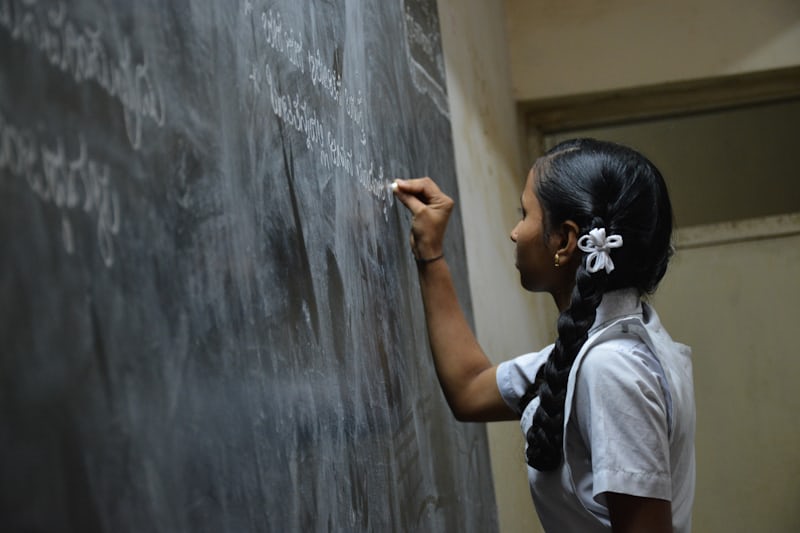
In some communities, there remains a persistent belief that education is a strategic investment for sons but a “lost” investment for daughters. This stems from the idea that a son will support his parents in old age, while a daughter will “marry away” into another family. This perspective is a core reason how cultural beliefs influence girl’s education levels in rural or traditional settings.
3. Early Marriage and the Rite of Passage
For many cultures, a girl’s value is tied to her transition into womanhood and marriage. When cultural milestones prioritize early marriage over graduation, education is often cut short.
How Cultural Beliefs Influence Girl’s Education and Marriage Norms
In regions where child marriage is socially accepted, the onset of puberty often marks the end of a girl’s schooling. Cultural pressure to secure a “good match” early can outweigh the perceived benefits of a high school diploma. The Solution: Community-led dialogues that show how an educated wife and mother can better contribute to the family’s economic and health status.
4. Safety, Honor, and Social Mobility
In many societies, a family’s “honor” is tied to a girl’s reputation. This is another significant way how cultural beliefs influence girl’s education—if the walk to school is deemed unsafe or if the school environment is co-educational, parents may keep their daughters home to protect them from social stigma or physical harm.
How Cultural Beliefs Influence Girl’s Education in H4 Vulnerable Regions
Where schools lack separate sanitation facilities or female teachers, cultural modesty may prevent girls from attending, particularly during menstruation. Addressing these cultural sensitivities is a mechanical necessity for keeping girls in the classroom.
Follow us on social media
- WhatsApp Channel
- WhatsApp Group 1
- WhatsApp Group 2
- WhatsApp Group 3
- Facebook Page
- X(twitter)
5. Language Barriers and Indigenous Traditions
Cultural identity is often preserved through native languages. In areas where the official school language is different from the community’s mother tongue, girls may be kept home to preserve cultural purity. Education is sometimes viewed with suspicion as a “Westernizing” force that might alienate a girl from her roots.
6. The “Hidden” Value of Non-Formal Learning
It is important to note that many cultures do value education, but they define it differently. They may prioritize religious studies or traditional craftsmanship over formal STEM subjects. Understanding this helps us see how cultural beliefs influence girl’s education choices, leading families to choose traditional apprenticeships over modern schooling.
7. Preference for Male Inheritance and Leadership
Cultural beliefs regarding who should lead a community or inherit land often favor men. This “leadership bias” naturally funnels educational resources toward boys, as they are seen as the future decision-makers of the tribe or village.
8. Religious Interpretations and Educational Access
While many religions promote literacy, local cultural interpretations can sometimes be used to restrict a girl’s curriculum. Balancing faith with a comprehensive modern education is a delicate process that requires the support of local religious leaders who advocate for female empowerment.
9. The Role of Community Elders and Matriarchs
In many cultures, the “gatekeepers” of tradition are the elders. If the older generation believes that a girl’s primary role is motherhood, the younger generation faces immense pressure to conform. Changing the narrative at the top of the cultural hierarchy is essential for shifting the future for the girls at the bottom.
10. Breaking the Cycle Through Cultural Evolution
Culture is not static; it is a living, breathing thing that changes over time. We are seeing a global shift where communities are beginning to recognize that “to educate a girl is to educate a nation.” This is the most powerful way how cultural beliefs influence girl’s education today—by evolving to view a daughter’s brilliance as a source of community pride rather than a threat to tradition.
Conclusion: Respecting Heritage, Empowering Futures
To truly impact how cultural beliefs influence girl’s education, we must work within the culture rather than against it. By highlighting the doctors, teachers, and leaders who have emerged from these communities, we can show that a girl can be both a guardian of her heritage and a pioneer of her future.
What can we do? Support initiatives that provide safe transport and female-led mentorship. When culture and education walk hand-in-hand, the entire world moves forward.