When discussing top-tier tertiary institutions in Nigeria, specifically those dedicated to science and engineering, the Federal University of Technology, Akure (FUTA) is a name that commands respect. But how did this academic giant start?
For students, aspirants, and history buffs, understanding the history of FUTA is key to appreciating its prestigious standing today. In this post, we will take a deep dive into the founding, growth, and evolution of Nigeria’s pride: FUTA.
1. The Inception: How It All Began (1981)
The history of FUTA dates back to 1981. It was founded by the Federal Government of Nigeria under the administration of President Shehu Shagari.
During this era, the government recognized a gap in the Nigerian education system. There was a pressing need for institutions that focused specifically on creating skilled, practically-oriented manpower in technology and science, rather than just theory.
To bridge this gap, the government established specialized Universities of Technology. FUTA was one of the specialized universities created during this wave, with the specific goal of driving the technological advancement of the nation.
Key Facts at a Glance:
- Year Founded: 1981
- Location: Akure, Ondo State, Nigeria
- Motto: “Technology for Self Reliance”
- First Vice-Chancellor: Professor Theodore Idibiye Francis
2. The Mandate: Technology for Self Reliance
What makes FUTA unique is its core philosophy. Unlike conventional universities, FUTA was not established just to churn out graduates; it was created to solve problems.
The university’s motto, “Technology for Self Reliance,” encapsulates its mission. The objective was—and still is—to produce graduates who are practical, innovative, and capable of using technology to create employment and solutions, rather than just seeking white-collar jobs.
Did You Know? FUTA is consistently ranked as the best University of Technology in Nigeria and arguably in West Africa.
3. Academic Expansion: The Evolution of “Schools”
In the beginning, FUTA started with a modest number of students and staff. Over the decades, it has expanded massively in terms of infrastructure and academic scope.
Unlike many universities that use the term “Faculties,” FUTA adopts the nomenclature of “Schools.” This distinction emphasizes the integrated and applied nature of its courses.
The university started with three foundation schools:
- School of Agriculture and Agricultural Technology (SAAT)
- School of Engineering and Engineering Technology (SEET)
- School of Earth and Mineral Sciences (SEMS)
FUTA Today: A Hub of Various Disciplines
Today, the university has expanded to include several other schools, catering to thousands of students:
- College of Health Sciences.
- School of Basic Medical Sciences (SBMS).
- School of Clinical Sciences (SCS).
- School of Computing (SOC)
- School of Life Sciences (SLS).
- School of Physical Science (SPS).
- School of Earth and Mineral Sciences (SEMS),
- School of Environmental Technology (SET).
- School of Electrical and Systems Engineering (SESE)
- School of Infrastructural, Minerals and Manufacturing Engineering (SIMME)
- School of Agriculture and Agricultural Technology (SAAT).
- School of Logistics and Innovation Technology (SLIT).
- School of Postgraduate Studies (SPGS).
The institution offers pre-degree science programs, short-term courses and University Advanced Basic Science programs. Visit cce.futa.edu.ng
4. The Campus: From Mini to Obanla
The physical growth of FUTA is just as impressive as its academic growth.
- The Mini Campus: FUTA initially operated from a temporary site (now the location of the Federal College of Agriculture, Akure).
- The Permanent Site (Obanla): The university eventually moved to its permanent site along the Ilesha-Akure expressway.
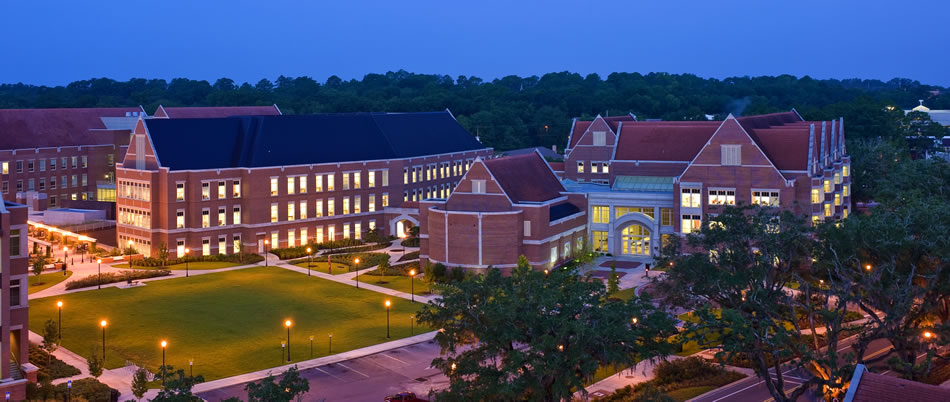
The “Obanla” campus is known for its serene environment, massive lecture theatres (like the 2,500-capacity auditorium), and state-of-the-art research laboratories.
Follow Us on Social Media
5. FUTA Vice-chancellors
The Vice-chancellors since 1981 include:
- Theodore Idibiye Francis (1981–1987)
- Albert Adeoye Ilemobade (1987–1995)
- Lawrence Babatope Kolawole (1996–1999)
- Ekundayo Adeyinka Adeyemi (acting; January 2000 – September 2001)
- Robert Adebowale Ogunsusi (acting; October 2001 – December 2001)
- Peter Olufemi Adeniyi (January 2002 – December 2006)
- Adebisi Mojeed Balogun (January 2007 – January 2012)
- Emmanuel Adedayo Fashakin (acting; February 2012 – May 2012)
- Adebiyi Gregory Daramola (May 2012 – May 2017)
- Joseph Adeola Fuwape (May 2017 – May 2022)
- Adenike Temidayo Oladiji (24 May 2022 – present)
5. Why FUTA Stands Out Today
Decades after its establishment, FUTA has lived up to its founding dreams. It is a hub for research, innovation, and technological breakthroughs.
- Ranking: FUTA frequently appears in the top 10 rankings of Nigerian universities by bodies like Webometrics and Times Higher Education.
- Alumni: The university has produced captains of industry, tech founders (especially in the Nigerian Fintech space), and renowned researchers globally.
- Culture: The students, often referred to as “FUTARIANS,” are known for a culture of academic rigor and resilience.
Conclusion
From a bold government initiative in 1981 to a global center of excellence today, the history of FUTA is a testament to consistency and vision. For any student aiming to study engineering, science, or technology in Nigeria, FUTA remains the premier choice.
The university continues to uphold its mandate, proving that technology is indeed the pathway to self-reliance for Nigeria.
Are you an aspiring FUTARIAN or an Alumnus? Share your favorite thing about FUTA in the comments below!
DISCLAIMER: This post is created purely for educational purposes alone.