
Explore 10 remarkable ways education empowers young girls in Nigeria. From economic independence to health literacy, see how educating a girl child transforms an entire nation.
There is a popular African proverb that says, “If you educate a man, you educate an individual, but if you educate a woman, you educate a nation.” In the heart of our vibrant Nigerian communities, this sentiment rings truer than ever. When we provide a girl with a backpack and a desk, we aren’t just giving her a place to sit; we are giving her a platform to lead.
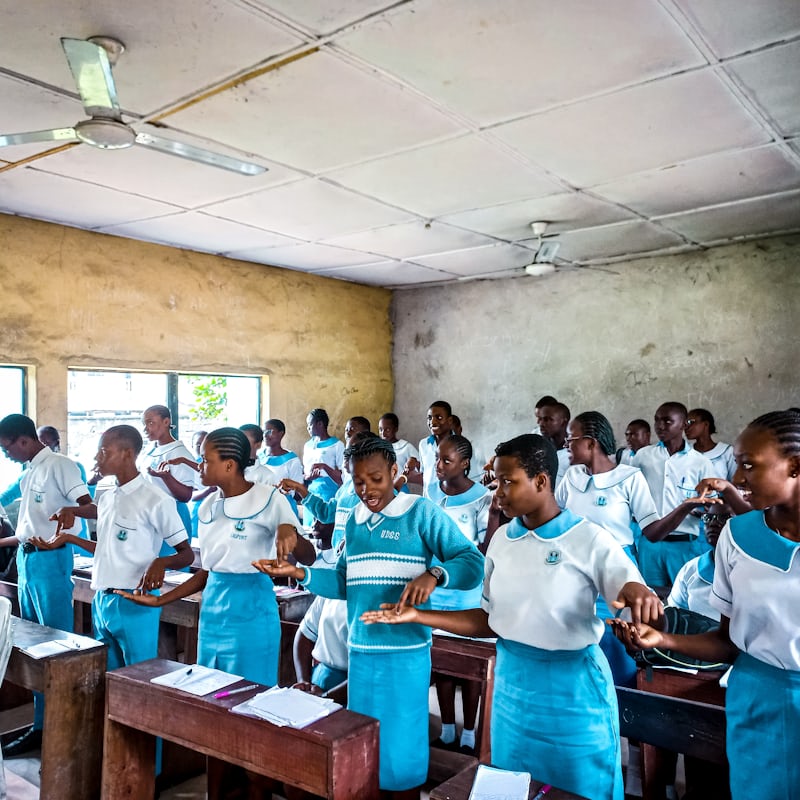
The many ways education empowers young girls are the keys to unlocking Nigeria’s full potential. From the tech hubs of Lagos to the agricultural belts of the North, an educated girl becomes a force of nature. Here is how that empowerment changes the world.
1. Financial Independence and How Education Empowers Young Girls
The most direct way education empowers young girls is by breaking the cycle of poverty. A girl with a secondary school education or a university degree is significantly more likely to enter the formal workforce. In Nigeria, where entrepreneurship is a way of life, education gives young women the accounting, marketing, and management skills needed to run successful businesses. This financial autonomy means she can support herself, contribute to her family, and invest in her community.
2. Improved Health Literacy and Maternal Outcomes
One of the most critical benefits of education is the drastic improvement in public health. Educated girls are better informed about nutrition, sanitation, and reproductive health. They are more likely to seek prenatal care and ensure their children are immunized. By understanding the science of well-being, these young women reduce infant mortality rates and raise healthier, stronger generations.
3. Delaying Early Marriage and Pregnancy
Statistics across West Africa consistently show that education empowers young girls to make informed choices about their bodies and their futures. Girls who stay in school are less likely to be pushed into early marriages. By staying in the classroom longer, they gain the maturity and economic standing to start families only when they are physically, emotionally, and financially ready.
4. Civic Participation and the Importance of Girl Child Education
The importance of girl child education is most visible in our leadership structures. Educated women are more likely to vote, engage in community advocacy, and run for office. When girls are taught history, law, and social studies, they realize they have a seat at the table. They become the voices advocating for better schools, cleaner water, and fairer laws in their local government areas.
5. Closing the Gender Pay Gap
Education is the ultimate equalizer in the Nigerian labor market. While disparities still exist, high-level skills in STEM (Science, Technology, Engineering, and Mathematics) allow young women to compete for high-paying roles in oil and gas, telecommunications, and finance. As more girls enter these fields, the national economy grows more diverse and resilient.
6. Enhanced Digital Skills for a Global Economy
In today’s world, education empowers young girls through digital literacy. In a country like Nigeria, where the “Yahoo-Yahoo” menace is a concern, educated girls use their tech skills for legitimate “remote work” and global freelancing. They can sit in a village in Ogun State and work for a company in London, bringing foreign exchange and global perspectives back home.
7. Building Confidence and Emotional Resilience
Beyond textbooks, school provides a social environment where girls learn to debate, collaborate, and lead. This builds “soft skills” that are essential for life. A girl who has successfully navigated the challenges of a difficult exam or a school project develops the grit needed to face life’s obstacles with her head held high.
Follow Us on Social Media
- WhatsApp Channel
- WhatsApp Group 1
- WhatsApp Group 2
- WhatsApp Group 3
- Facebook Page
- X(twitter)
8. Breaking the Chains of Domestic Violence
Knowledge is power, and in many cases, it is also protection. Educated women are more aware of their legal rights and are better equipped to recognize and escape abusive situations. By fostering a sense of self-worth, education ensures that young girls do not settle for less than they deserve in their personal relationships.
9. Environmental Awareness and Sustainability
As climate change impacts Nigerian agriculture and coastal cities, educated girls are often at the forefront of the “green” movement. They learn about sustainable farming, waste management, and renewable energy, teaching their families how to adapt to a changing environment.
10. The Multiplier Effect: Why Education Empowers Young Girls Long-Term
An educated mother is almost certain to educate her own children—both boys and girls. This creates a permanent shift in the community’s values. When we ensure education empowers young girls today, we are effectively guaranteeing that the children of 2050 will be born into a more enlightened and prosperous society.
Conclusion: The Path Forward for Nigeria
Investing in the girl child is not an act of charity; it is a strategic national investment. When education empowers young girls, every sector of Nigerian society thrives. Let us continue to push for policies that keep our daughters in school, for they are the architects of our future.