
Examine how public speaking builds student confidence inside the classroom. Discover 10 powerful reasons why vocal mastery drives 100% of lifelong self-belief.
In the contemporary educational discourse of 2026, we frequently emphasize the accumulation of technical knowledge and digital literacy. Yet, one of the most transformative intellectual tools remains entirely rooted in the ancient art of rhetoric. Understanding how public speaking builds student confidence requires looking past the immediate mechanics of delivering a presentation; it is about recognizing that vocalizing one’s thoughts in front of an audience is a profound catalyst for personal evolution and cognitive empowerment.
For many students, the prospect of standing before a podium induces a visceral sense of dread. However, when an educational institution deliberately integrates oral defense and presentation skills into the core curriculum, it is not merely testing academic retention. It is providing a safe, structured laboratory where students can confront their anxieties, refine their logic, and claim their unique intellectual authority. Let us analyze the ten multifaceted dimensions of how commanding a room shapes a student’s internal psychology.
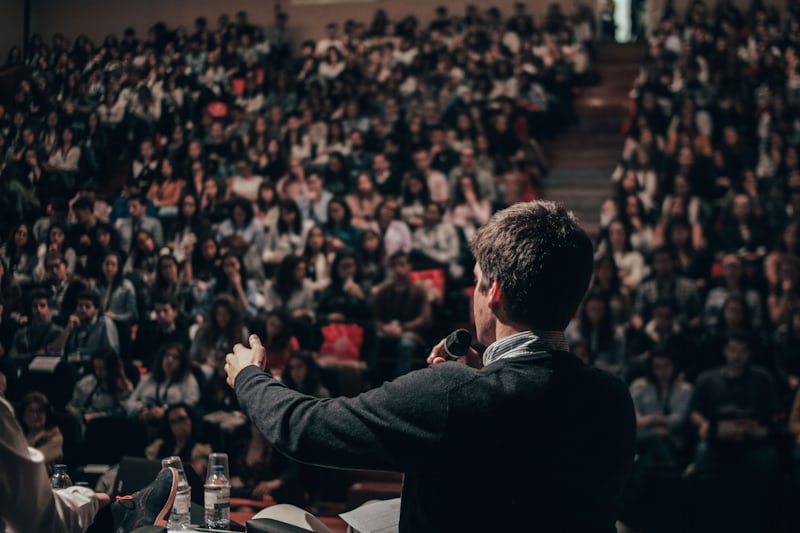
1. Shattering the Illusion of Incompetence Through Confrontation
The primary psychological argument for how public speaking builds student confidence centers on the principle of systematic desensitization. Anxiety thrives on avoidance; the longer a student shies away from oral expression, the more monumental the fear becomes. When a student steps up to speak and successfully navigates the experience, they shatter the internal myth that they are incapable of handling high-stakes social pressure, fundamentally resetting their baseline of self-belief.
2. Refining the Architecture of Clear Thought and Articulation
You cannot speak clearly if you have not thought clearly. The process of preparing a speech forces a student to audit their own mind, strip away irrelevant data, and organize arguments into a cohesive narrative structure. This linguistic mastery is a critical pillar of how public speaking builds student confidence, as it transforms vague ideas into precise, impactful assertions that command immediate respect from peers and mentors.
3. The Neurological Shift from Hyper-Vigilance to Mastery
Standing before a crowd triggers an immediate adrenaline surge. The difference between a confident individual and an anxious one lies in how that energy is synthesized.
How Public Speaking Builds Student Confidence and Emotional Regulation
When a student practices rhetoric consistently, the brain learns to interpret the physical symptoms of stress not as a threat, but as a source of focus. The Solution: By managing their breathing and pacing through a deliberate speech, the student achieves a 100% sense of physical control, directly training the nervous system to remain calm under intense scrutiny.
4. Cultivating Authentic Executive Presence and Social Influence
Beyond the classroom walls, the ability to project your voice serves as a baseline requirement for professional leadership. Every time a student effectively holds an audience’s attention, they are practicing the nuances of tone, body language, and spatial awareness. This specific dimension of how public speaking builds student confidence highlights that vocal mastery yields immediate authority, ensuring that the student transitions into the competitive professional market with the assertive communication skills required for long-term career survival.
5. Converting Feedback and Criticism into Intellectual Fuel
A public address is a live experiment that provides immediate, tangible feedback. If an audience tilts their heads in confusion, the speaker must adapt; if they nod in agreement, the speaker is validated. This real-time loop teaches students to treat critique as a diagnostic tool rather than a personal assault, building a thick skin and an adaptable mindset that is bulletproof against failure.
6. Validating the Unique Personal Voice in Academic Spheres
A major social variable in how public speaking builds student confidence is the psychological realization that one’s perspective matters. Many quiet students assume their thoughts are redundant or uninteresting. Being granted a dedicated platform to present their research forces the community to listen, providing an undeniable confirmation that their intellectual contribution possesses distinct, measurable value.
7. Accelerating Critical Thinking and Impromptu Reasoning
Not all speaking situations allow for rigid preparation; Q&A sessions require students to think on their feet. Answering unexpected inquiries from a teacher or peer forces the brain to rapidly retrieve information and synthesize it into a logical reply. This mental agility builds a profound trust in one’s own intelligence, ensuring the student feels capable of handling unpredictability.
- WhatsApp Channel
- WhatsApp Group 1
- WhatsApp Group 2
- WhatsApp Group 3
- Facebook Page
- X(twitter)
8. Overcoming the Digital Paradox of Isolation
In our digital era, much communication has been reduced to screens, text blocks, and curated personas. This shift has inadvertently left youth ill-equipped for face-to-face friction. Public speaking breaks through this digital isolation, reminding students of the immense power found in genuine human eye contact, natural cadence, and shared physical presence.
9. Strengthening Peer Rapport and Collective Empathy
When an entire classroom undertakes public speaking assignments, a collective vulnerability emerges. Students witness their peers struggle, adapt, and succeed, which fosters deep mutual respect and group cohesion. This supportive network ensures that the act of speaking becomes a unifying ritual rather than a divisive competition.
10. Driving Civic Agency and the Courage to Change the World
Finally, a student who knows how to speak is a student who knows how to advocate. Whether challenging an unfair policy, pitching an entrepreneurial venture, or defending a marginalized perspective, rhetoric is the tool of change. The ultimate value of this skill is that it transforms quiet observers into active, confident citizens who understand that their voice can alter the world around them.
Conclusion: Command the Stage, Secure the Future
Ultimately, recognizing how public speaking builds student confidence requires us to view the podium not as an instrument of torture, but as an engine of liberation. True confidence is not the absence of fear; it is the absolute certainty that your voice is powerful enough to overcome it. By stepping up to speak, students unlock the ultimate weapon for personal and academic mastery.
What is your next move? Do not wait for a formal invitation to speak up. Challenge yourself or the young learners in your life to articulate one bold idea in the very next group session—the journey to total self-reliance begins with a single, clear sentence.