
Discover how education promote leadership skill through critical thinking, teamwork, and communication. Explore 10 proven ways schools develop the leaders of tomorrow.
The world is constantly evolving, and with it, the demand for visionary leaders who can navigate complex global challenges. While some believe leaders are born, modern pedagogy proves that leadership is a cultivated trait. Understanding how education promote leadership skill is essential for students, parents, and educators who want to prepare the next generation for impactful roles in society.
Education serves as the primary incubator for the qualities that define a great leader: empathy, strategic thinking, and the ability to inspire others. Let’s break down the mechanics of this transformation.
1. Cultivating Critical Thinking and Decision-Making
At its core, leadership is about making difficult choices under pressure. This is the first way how education promote leadership skill—by challenging students to move beyond “what” and “where” to “why” and “how.”
In a classroom setting, students are often presented with case studies or complex problems that have no single right answer. This environment forces them to weigh evidence, consider diverse perspectives, and take a stand. These are the exact same mental muscles required to lead a corporation or a community.
2. Developing Emotional Intelligence Through Social Interaction
Schools are diverse social ecosystems. By interacting with peers from various backgrounds, students learn to navigate different personalities and cultural nuances.
How Education Promote Leadership Skill Through Peer Collaboration
When students work on group projects, they aren’t just learning the subject matter; they are learning the art of influence. They must learn to listen, compromise, and motivate team members who may have different work ethics. This real-world practice in emotional intelligence is a cornerstone of effective leadership.
3. Mastering the Art of Public Speaking and Communication
A leader without a voice cannot lead. One significant way how education promote leadership skill is by providing a safe platform for oral expression. Whether it is a formal debate, a class presentation, or a theater performance, education strips away the fear of public speaking.
Leaders must be able to articulate a vision clearly and persuasively. Through repeated exposure to presentation-based learning, students refine their rhetoric and learn how to tailor their message to their audience.
4. Building Resilience via Academic Rigor
True leadership is tested during times of failure. Education provides a “low-stakes” environment where students can fail and recover.
How Education Promote Leadership Skill in H4 Science and Sports
In science labs or on the sports field, things rarely go perfectly on the first try. When a student fails a test or loses a game, they are taught to analyze the setback and try again. This builds “grit,” a quality that allows leaders to remain calm and focused when faced with professional crises later in life.
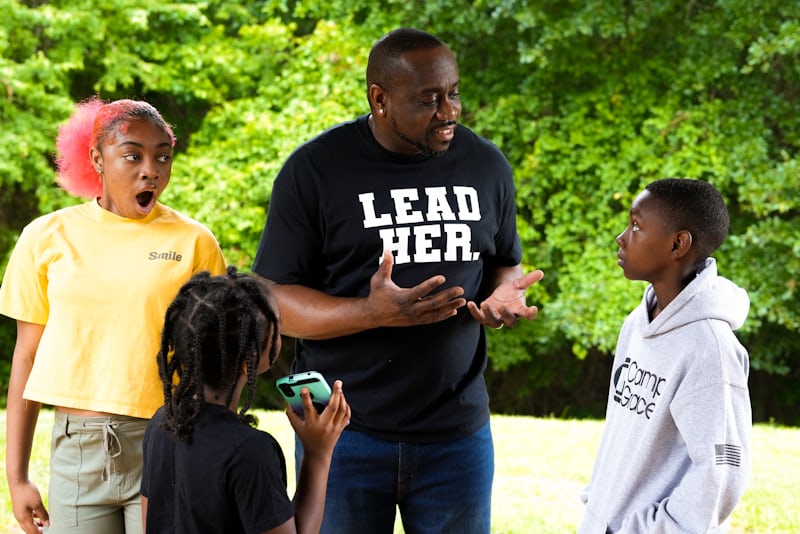
5. Encouraging Civic Engagement and Ethics
Leadership without ethics is dangerous. Education plays a vital role in teaching the moral framework of leadership. By studying history and social sciences, students learn about the impact of both great and failed leaders.
This exposure helps them understand the importance of:
- Integrity: Doing the right thing when no one is watching.
- Empathy: Considering the impact of decisions on the most vulnerable.
- Justice: Advocacy for fairness within a system.
6. Providing Opportunities for Formal Leadership Roles
From student council to club presidencies, schools offer formal positions that act as a laboratory for leadership. This is a direct method of how education promote leadership skill. These roles require students to manage budgets, organize events, and represent their peers to the school administration. It is a “test drive” for the responsibilities of adult life.
Follow us social media
- WhatsApp Channel
- WhatsApp Group 1
- WhatsApp Group 2
- WhatsApp Group 3
- Facebook Page
- X(twitter)
7. Promoting Time Management and Self-Discipline
A leader who cannot lead themselves cannot lead others. The structure of an educational environment—deadlines, exams, and extracurriculars—demands high-level organization. This discipline is a prerequisite for leadership, ensuring that the individual is reliable and prepared.
8. Fostering a Global Perspective
In an interconnected world, leaders must look beyond their own borders. Modern education emphasizes global citizenship, teaching students about international relations, global economics, and environmental sustainability. This broadens their horizon, allowing them to lead with a mindset that considers the global impact of local actions.
9. Mentorship and the Power of Role Models
Teachers often serve as the first professional leaders a child encounters. By observing how a teacher manages a classroom with fairness and authority, students absorb leadership traits through osmosis. Furthermore, many educational programs offer mentorship programs that connect students with industry leaders, providing a roadmap for their own journeys.
10. Sparking Innovation and Creativity
Finally, how education promote leadership skill is tied to creativity. Leaders are often the ones who see a “third way” when others see only two options. Education that encourages “out-of-the-box” thinking empowers students to challenge the status quo and innovate, which is the hallmark of transformational leadership.
Conclusion: The Lifelong Impact of a Classroom
Investing in education is the most effective way to ensure a stable and progressive future. When we understand how education promote leadership skill, we realize that the classroom is not just a place for learning facts—it is the training ground for the pioneers, CEOs, and activists of tomorrow.
By prioritizing these leadership qualities today, we prepare our students to not just live in the future, but to create it.