To achieve a future that balances environmental health with economic growth, we must first address the classroom. When we analyze why education is important for sustainable development, we find that it is the foundation upon which all other global goals are built. Education isn’t just about literacy; it’s about shifting mindsets toward a more resilient and equitable world.
Without a structured role of education in sustainability, modern society lacks the tools to address climate change, resource depletion, and social inequality.
1. Promoting Environmental Awareness and Climate Action
The most immediate reason why education is important for sustainable development is its power to foster environmental stewardship. Students who understand the science of ecology are far more likely to adopt sustainable lifestyles.
- Resource Management: Learning how to reduce waste and conserve water.
- Biodiversity: Understanding the delicate balance of our ecosystems.
By emphasizing the benefits of sustainable development early in life, schools create a generation that views the planet as a finite resource requiring protection rather than a limitless bank for extraction.
2. Empowering Economic Growth and Innovation
Education is a primary driver of economic stability. However, sustainable development requires a specific type of growth—one that doesn’t sacrifice tomorrow for today. This is why education is important for sustainable development in the professional sector.
- Green Skills: Training the workforce for jobs in renewable energy and circular economies.
- Poverty Reduction: Providing the skills needed to escape poverty without relying on environmentally damaging industries.
As we look at the global goals for education, the focus is increasingly on “decent work and economic growth” through sustainable practices.
Follow us on social media
- WhatsApp Channel
- WhatsApp Group 1
- WhatsApp Group 2
- WhatsApp Group 3
- Facebook Page
- X(twitter)
3. Achieving Gender Equality and Social Inclusion
You cannot have sustainability without social justice. Education breaks the cycle of inequality by empowering marginalized groups. When girls and women have equal access to learning, the benefits of sustainable development are amplified across entire communities.
Research consistently shows that educated women have smaller, healthier families and contribute more to the local economy, which is a core reason why education is important for sustainable development on a demographic scale.
4. Enhancing Health and Well-being Through Literacy
Sustainability includes the health of the human population. The role of education in sustainability extends to teaching hygiene, nutrition, and disease prevention. An educated population can better navigate public health crises, ensuring that society remains stable and productive even under pressure.
5. Strengthening Global Goals for Education and Collaboration
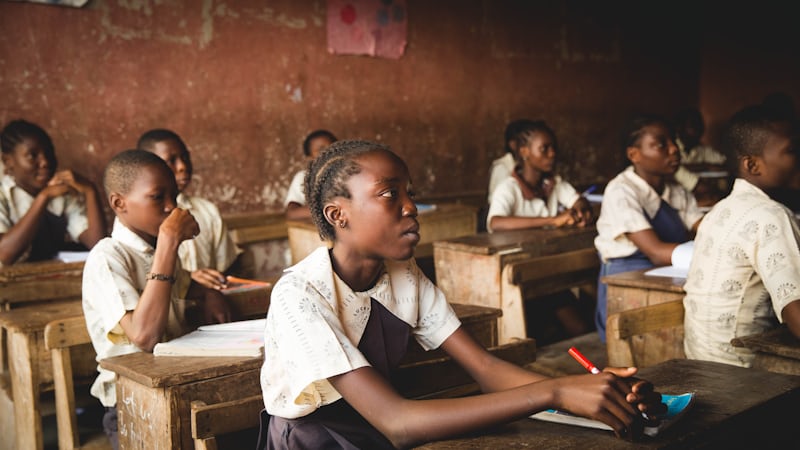
The United Nations Sustainable Development Goal 4 (SDG 4) focuses specifically on quality education. But why education is important for sustainable development across all 17 goals? It’s because education provides the common language for international cooperation.
Whether it’s a scientist in Japan or a farmer in Kenya, shared knowledge allows for the global exchange of sustainable technologies and ideas. This collaborative spirit is the ultimate educational impact on technology and global survival.
6. Fostering Responsible Consumption and Production
Education changes how we buy and what we build. By teaching the lifecycle of products, the role of education in sustainability helps consumers make ethical choices.
- Critical Thinking: Analyzing the “hidden costs” of cheap goods.
- Circular Economy: Understanding how to design products that can be reused or recycled.
This shift in consumer behavior is a vital part of why education is important for sustainable development in a consumer-driven world.
7. Protecting Peace, Justice, and Strong Institutions
Conflict is one of the greatest threats to a sustainable planet. Education fosters tolerance and helps build the institutional strength required to maintain peace. When people are educated, they are better equipped to participate in democratic processes and hold leaders accountable for environmental and social policies.
8. The Role of Education in Sustainability for Future Generations
Sustainable development is defined as meeting current needs without compromising future generations. Education is the “bridge” between these eras. By instilling values of conservation and ethics today, we ensure that the benefits of sustainable development last for centuries, not just decades.
9. Driving Local Solutions to Global Problems
While the problems are global, the solutions are often local. Education gives people the analytical tools to solve problems specific to their geography—such as drought-resistant farming or coastal protection. This localized expertise is a key reason why education is important for sustainable development.
10. Cultivating a Sense of Global Citizenship
Ultimately, education teaches us that we are all connected. This sense of global citizenship is the psychological core of sustainability. It transforms “their problem” into “our problem,” leading to the collective action needed to save our shared home.
Conclusion: Investing in the Foundation of the Future
In summary, asking why education is important for sustainable development reveals that it is the most powerful tool we have for change. By meeting the global goals for education, we aren’t just filling heads with facts; we are building a foundation for a cleaner, fairer, and more prosperous world for everyone.